Galvanic Corrosion: The silent hull-eater.
Why "Silent Hull-Eater"?
There is something particularly unsettling about a threat you cannot see. Galvanic corrosion earns its grim nickname because it works quietly beneath the waterline, steadily eating away at your narrowboat's steel hull while you enjoy a cuppa in the cabin above.
Unlike a visible scratch or a dent you might spot during blacking, galvanic corrosion operates in stealth mode. By the time you notice something is wrong: perhaps blistering paint or suspicious pitting during a dry dock: the damage may already be significant. We have seen boats lose years of hull life in a matter of months when galvanic corrosion goes unchecked.
The truly frustrating part? It can accelerate rapidly under certain conditions, turning a minor issue into an expensive repair bill before you even realise there is a problem.
Understanding the Science (Without the Lab Coat)
You do not need a chemistry degree to grasp what is happening. Think of galvanic corrosion as an unwanted battery operating on your hull.
When two different metals sit in water together: say, your steel hull and a bronze propeller: they create a tiny electrical circuit. Electrons flow from one metal to the other through the water, which acts as a conductor. The metal that loses those electrons (the anode) corrodes and breaks down. The metal that gains them (the cathode) stays protected.
On a narrowboat, your steel hull often ends up playing the role of the anode. That means your hull is the one sacrificing itself, atom by atom, to protect the bronze fittings, stainless steel components, and other metals attached to it.
Not exactly the arrangement you want.
The Heroes of Your Hull: Sacrificial Anodes
This is where sacrificial anodes come in, and they really are the unsung heroes of narrowboat ownership.
The principle is beautifully simple. We attach blocks of a more reactive metal: typically magnesium or zinc: to your hull. These anodes are deliberately more "willing" to corrode than your steel hull. So when that galvanic circuit kicks in, the anodes sacrifice themselves instead of your boat.
It is a bit like having a bodyguard who takes the hit so you do not have to.
However, there is a catch. Anodes do not last forever. They are literally designed to be consumed. Once they have corroded away to nothing, your hull becomes the next target on the menu.
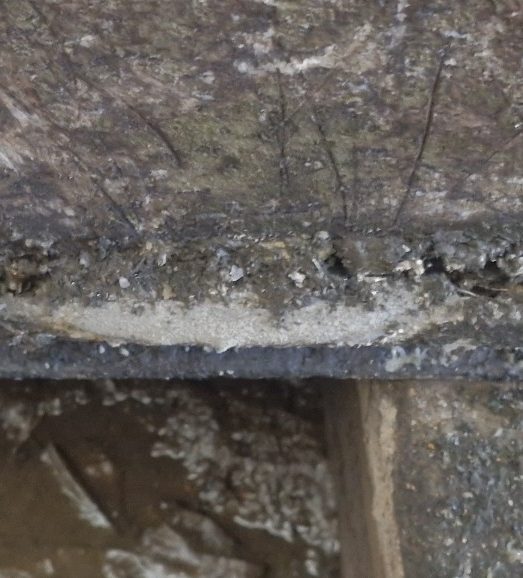
The photo above shows exactly what happens when anodes near the end of their service life. You can see the heavy corrosion and surface wear. These anodes have done their job: but they are now due for replacement. Leaving them like this much longer would mean the hull starts taking the damage instead.
We generally recommend checking your anodes at least once a year. If they have lost more than 50% of their original mass, it is time for new ones.
The Shore Power Problem
Here is something that catches many narrowboat owners off guard: plugging into shore power can dramatically accelerate galvanic corrosion.
When you connect to a marina's electrical supply, your boat becomes part of a much larger electrical network. If other boats on the same pontoon have poor electrical systems or faulty wiring, stray currents can flow through the water and into your hull. Your boat might end up protecting someone else's vessel: at the expense of your own steel.
This is not a theoretical concern. We regularly see accelerated corrosion patterns on boats that spend long periods connected to shore power without proper protection.
The Solution: Galvanic Isolators
A galvanic isolator is a relatively inexpensive device that blocks these low-voltage stray currents while still allowing your electrical safety earth to function normally. It sits in line with your shore power cable and acts as a gatekeeper.
If you spend any significant time plugged in at a marina, fitting a galvanic isolator is one of the smartest investments you can make. We have seen the difference it makes during surveys: boats with isolators consistently show healthier hull conditions than those without.
The cost of a decent galvanic isolator? Around £50-£150. The cost of replating a corroded hull section? Considerably more. The maths speaks for itself.
How We Spot Galvanic Corrosion During a Survey
At Hull Safe Surveys, identifying corrosion is a core part of what we do. Galvanic corrosion often leaves distinctive patterns that tell a story about what has been happening beneath the waterline.
Reading the Signs
Galvanic corrosion does not attack randomly. It tends to concentrate around:
- Areas near dissimilar metals (around the prop shaft, skin fittings, and anodes)
- Weld seams where the metal composition differs slightly
- Spots where protective coatings have failed
We look for telltale signs like localised pitting clusters, white powdery deposits on exposed metal, and paint blistering in specific zones rather than across the entire hull.
Our Survey Equipment
Spotting corrosion patterns is one thing. Measuring the actual damage is another.
We use the Tritex 5750 ultrasonic thickness gauge to take precise readings of your hull steel. This clever bit of kit sends sound waves through the metal and measures how long they take to bounce back. The result? Accurate thickness measurements down to 0.01mm, without needing to remove any paint or coatings.
By taking multiple readings across the hull, we can map out exactly where material loss has occurred and how severe it is.
For visible pitting, we bring out the Mitutoyo depth gauge. This tool lets us measure the depth of individual pits with precision. A pit might look shallow to the eye but actually penetrate deeper than expected. Knowing the true depth helps us assess whether the hull is still within safe tolerances or whether remedial work is needed.
What the Readings Tell Us
When we see a pattern of accelerated thinning near metal fittings or in areas connected to shore power, galvanic corrosion moves to the top of our suspect list. We can often trace the problem back to its source: worn anodes, missing galvanic isolators, or incompatible metal combinations.
This information goes into your survey report, along with clear recommendations for protecting your hull going forward.
Protecting Your Investment
Galvanic corrosion might be silent, but it does not have to be invisible. With the right approach, you can stay ahead of it:
- Check your anodes regularly and replace them before they are fully consumed
- Fit a galvanic isolator if you use shore power
- Avoid mixing incompatible metals when adding fittings or making repairs
- Book regular hull surveys to catch problems early
A pre-purchase survey or condition survey can reveal galvanic corrosion damage that might otherwise go unnoticed until it becomes a major headache. We would much rather tell you about a potential problem now than have you discover it the hard way later.
Book Your Hull Survey
If you are concerned about galvanic corrosion: or simply want peace of mind about your hull's condition: we are here to help. Our surveys use professional-grade equipment to give you a clear, accurate picture of what is happening beneath the waterline.
Get in touch via our contact page or check out our pricing to see how we can help protect your narrowboat from the silent hull-eater.